
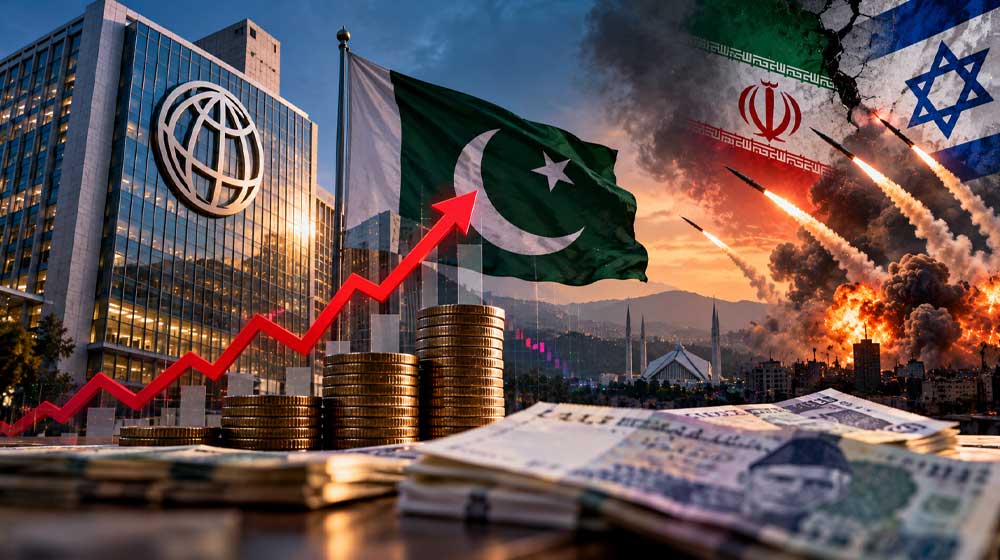
A long war in the Middle East is now the biggest danger to Pakistan’s economy, the World Bank said in a report released on October 22, 2026. It warned that costlier oil and tighter global lending could make it harder for Pakistan to repay and refinance its debt.
The warning comes in the World Bank’s Pakistan Development Update, titled Attaining Escape Velocity. The bank publishes this report twice a year. It expects the war, which began on February 28, 2026, to keep hurting Pakistan until the end of 2026 and then calm down slowly during 2027.
Pakistan still borrows to repay old loans
Pakistan does not earn enough dollars to clear its foreign loans on time. So every year it asks friendly countries and lenders to “roll over” the debt. This means they agree to extend the loan instead of taking their money back.
The report puts Pakistan’s external financing needs at around 5% of GDP, or the total size of the economy, in the near term, The Express Tribune reported. The World Bank said tighter global money conditions could raise borrowing costs and reduce lending to countries like Pakistan. That would make these rollovers harder at a critical time.
The bill is large. State Bank of Pakistan Governor Jameel Ahmad said in July that Pakistan must pay $21.5 billion on foreign debt this fiscal year, down from $26.5 billion last year, Business Recorder reported. At last year’s average rate of Rs. 280.4 per dollar, that comes to about Rs. 6 trillion.
Some of that is already covered. Jameel Ahmad said about $6 billion in rollovers had been arranged in July 2026. Saudi Arabia also extended $5 billion in deposits until December 2028, The Express Tribune reported.
Crude oil bill rose 46% in six months
Oil is where the war hits Pakistan hardest. Petroleum and gas made up about a quarter of Pakistan’s imports in FY25, and Gulf countries supplied nearly 80% of them, according to the report.
From January to June 2026, Pakistan’s crude oil import bill was 46.4% higher than a year earlier, the report found. Buying about half as much imported gas (LNG) softened the blow. Strong money transfers from overseas Pakistanis also helped.
If the war drags on, the World Bank warned, high energy prices could widen the gap between what Pakistan spends abroad and what it earns. That would put pressure on foreign exchange reserves. These stood at $19.7 billion at the end of June 2026, enough to pay for 2.8 months of imports, according to the bank’s October Macro Poverty Outlook.
Prices expected to rise faster this year
For ordinary families, the war shows up in prices. Inflation rose to 7.1% in FY26 as higher world oil prices reached local markets from March 2026, the World Bank said. It expects inflation to climb to 8.2% this fiscal year, up from just 4.5% in FY25.
In simple terms, for every Rs. 1,000 a household spent on goods a year ago, it can expect to pay about Rs. 82 more on average. The bank said poor families feel this most because they spend a bigger share of their money on food and fuel.
Recovery is real but still fragile
The report also gave Pakistan credit. The economy grew 3.7% in FY26, up from 3.2% the year before. The government also ran a record surplus of 2.9% of GDP before counting interest payments. S&P and Moody’s raised Pakistan’s credit ratings, and the country sold a $3 billion Eurobond, a bond bought by foreign investors.
“Pakistan has made real progress in restoring stability, and markets have taken notice,” said Bolormaa Amgaabazar, the World Bank’s Country Director for Pakistan.
The bank expects growth of 3.8% this year. It urged the government to publish a clear budget plan for the coming years before the current International Monetary Fund (IMF) loan programme ends in September 2027, and before elections due in early 2029.