


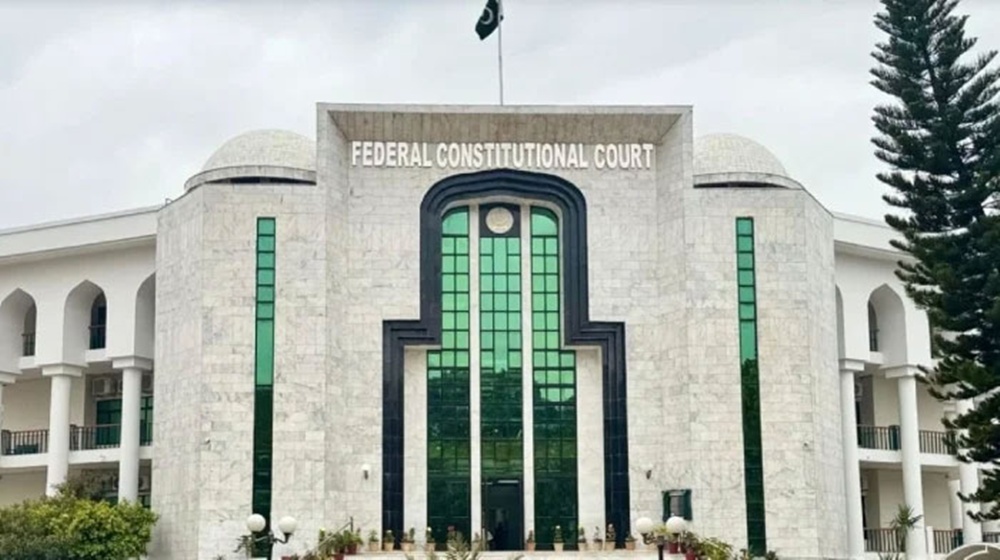
The Federal Constitutional Court has ruled that a sexual element must exist for action under the law that protects workers from harassment. The court held that the harassment law does not cover every general complaint. Moreover, it ruled that complaints lacking a sexual element fall outside the Federal Ombudsman’s jurisdiction.
A three-member bench led by Chief Justice Aminuddin Khan heard the appeals. Justice Ali Baqar Najafi authored the 18-page detailed judgment. Therefore, the court set aside the Islamabad High Court’s 2024 decision and restored the president’s order.
According to the judgment, not every improper or unwelcome behaviour amounts to sexual harassment. The court said the law does not apply to every complaint of a general nature. Furthermore, it ruled that complaints without a sexual element sit outside the Federal Ombudsman’s jurisdiction. However, institutions may still handle inappropriate behaviour under service rules through disciplinary action.
The court said the law exists to protect women and men from sexual harassment in the workplace. It also held that the president holds the authority to hear representations against the Federal Ombudsman’s decisions. Meanwhile, a high court can interfere in such matters only on limited constitutional grounds.
The case involved two bank officers whom the Federal Ombudsman had dismissed. The president later converted their dismissal into a warning. However, the Islamabad High Court had overturned that order and restored the ombudsman’s decision. The Supreme Court’s ruling now reverses that outcome and settles the dispute in the officers’ favour.
This judgment clarifies how courts and institutions should interpret the harassment law in future workplace cases. Additionally, it draws a clearer line between sexual harassment complaints and general workplace grievances. Instead of routing every complaint through the ombudsman, institutions may now handle non-sexual misconduct through internal disciplinary channels. Finally, the ruling confirms the president’s role in reviewing ombudsman decisions.

