
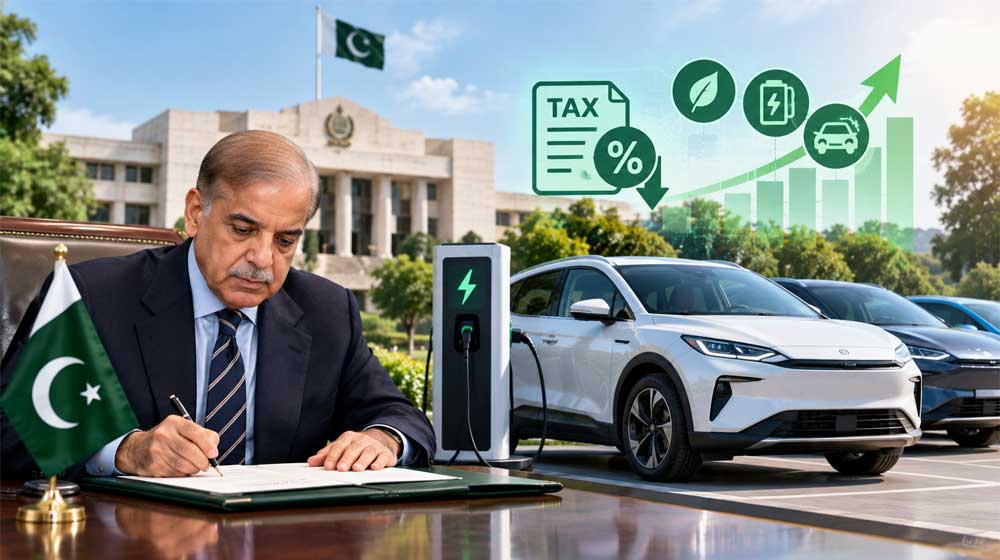
Prime Minister Shehbaz Sharif has approved tax relief for NEVs under the draft five-year Auto Policy for 2026 to 2031. The approval includes a 1 percent sales tax on new energy vehicles, along with exemptions from several other levies. Additionally, the policy covers completely knocked down kits, parts, and raw materials used in NEV production.
Under the plan, NEVs will be exempt from federal excise duty, Capital Value Tax, and withholding tax. Meanwhile, conventional vehicles will face additional federal excise duty to offset the price drop caused by tariff reductions elsewhere in the policy. The government has also raised the loan limit for NEV purchases from Rs3 million to Rs10 million. Loan tenure, too, will extend from three years to five years.
Battery electric vehicles will receive the most favorable treatment, followed by range extended electric vehicles and plug-in hybrids. However, the prime minister rejected a committee proposal that would have treated all three categories equally. Instead, he directed officials to separate these vehicle types for tax purposes. Hybrid vehicles and conventional combustion-engine cars, by contrast, will receive equal treatment under the new rules.
Customs duty on imported charging stations will sit at just 1 percent, and battery swap stations will get support through viability gap funding. Furthermore, the premier ordered the removal of federal excise duty on conventional cars below 1000cc. He also cut customs duty on all cars to 15 percent for the policy’s fifth year.
The broader tariff structure will still protect existing assemblers, though that protection tapers off over time. Regulatory duties will phase out by fiscal year 2029-30, and tariffs will stay unchanged for the first two years. Therefore, price cuts for smaller vehicles may take time to materialize, with meaningful reductions only appearing closer to the fifth year of implementation.
The draft policy now moves to legal vetting, and the Finance Ministry has been asked to present it to the International Monetary Fund for review. Meanwhile, the policy also sets export targets and aims to attract anchor parts manufacturers to build stronger domestic supply chains.