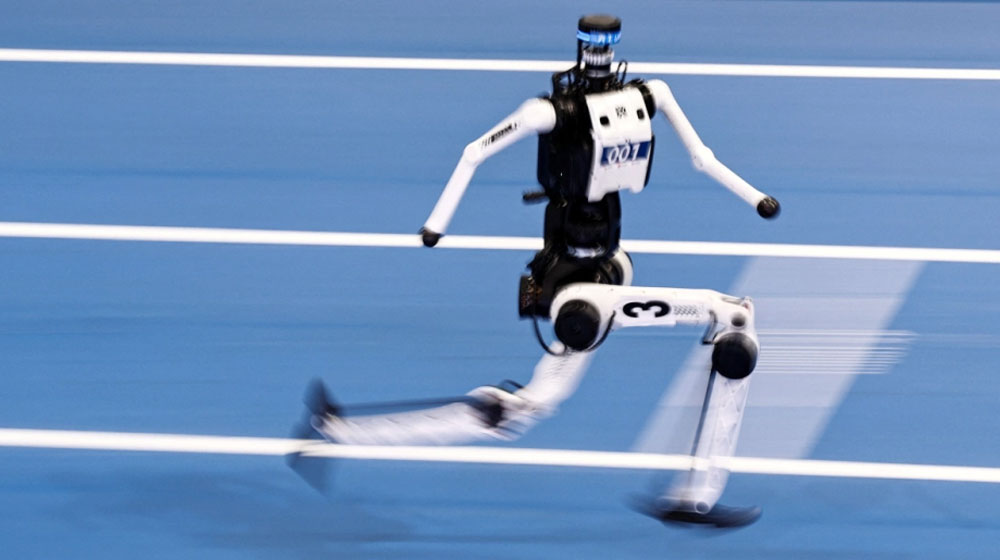
Athletic history witnessed an unprecedented moment this weekend. A Chinese humanoid robot beat Usain Bolt’s world record dramatically. Therefore, Chinese robot beats Usain Bolt headlines dominate sports and technology news worldwide. Tiangong Ultra ran 100 meters in just 9.39 seconds during preliminary heats. This time beat Bolt’s legendary 9.58-second record held since 2009. The World Humanoid Robot Games in Beijing hosted this remarkable achievement. Developed by the Beijing Humanoid Robot Innovation Center, Tiangong Ultra demonstrated extraordinary capabilities.
The race showcased intense competition between advanced robotic systems. Tiangong Ultra initially fell behind early in the race unexpectedly. However, the robot overtook smartphone maker Honor’s Lightning near the finish line dramatically. Lightning finished in 9.47 seconds—also faster than Bolt’s historic record. Therefore, both robots achieved sub-Bolt times demonstrating rapid technological progress. Neither robot displayed Bolt’s characteristic finish-line flair though. Instead, they slammed directly into protective mats designed stopping their momentum. Tiangong stumbled wildly into sidelines forcing spectators to move quickly. Meanwhile, Lightning collapsed completely requiring stretcher removal afterward.
This year’s results represent dramatic improvement from previous competitions. Last year’s inaugural games saw Tiangong Ultra complete 100 meters in 21.50 seconds. Therefore, this year’s 9.39-second time demonstrates massive technological advancement. Additionally, Tiangong won the world’s first humanoid robot half-marathon last year. This established the robot’s reputation for endurance capabilities previously.
Chinese state media revealed additional impressive testing results. Lightning ran 100 meters in 9.32 seconds during preparatory testing earlier Saturday. The robot reached peak speeds of 14.5 meters per second remarkably. Furthermore, Lightning won this year’s humanoid half-marathon in 50 minutes and 26 seconds. This pace exceeded elite human world record times significantly. Engineers modified Lightning’s physical dimensions before the games strategically. Original leg length measured 95 centimeters during the half-marathon. Subsequently, researchers extended legs to 1.05 meters improving speed capabilities.
China’s massive investment in humanoid robotics reflects strategic national priorities. Policymakers view robotics as a critical emerging industry sector. Additionally, companies bet that AI and hardware advances will accelerate practical applications. Manufacturing, logistics and consumer applications all stand to benefit substantially. Investor enthusiasm demonstrated this excitement clearly this week. Unitree, China’s prominent humanoid robot maker, saw shares jump fivefold. The Shanghai trading debut valued the company at approximately $50 billion.
The competition scale demonstrates remarkable industry growth. This year’s games attracted 2,056 robots from 666 teams. Sixteen countries across six continents participated actively. This represents substantial growth from 280 teams at the inaugural event. The games span 51 total events including football, dancing and industrial tasks. Beijing’s National Speed Skating Oval hosts competitions through Wednesday. Finally, Chinese robot beats Usain Bolt demonstrates humanoid robotics reaching remarkable athletic capabilities previously unimaginable.