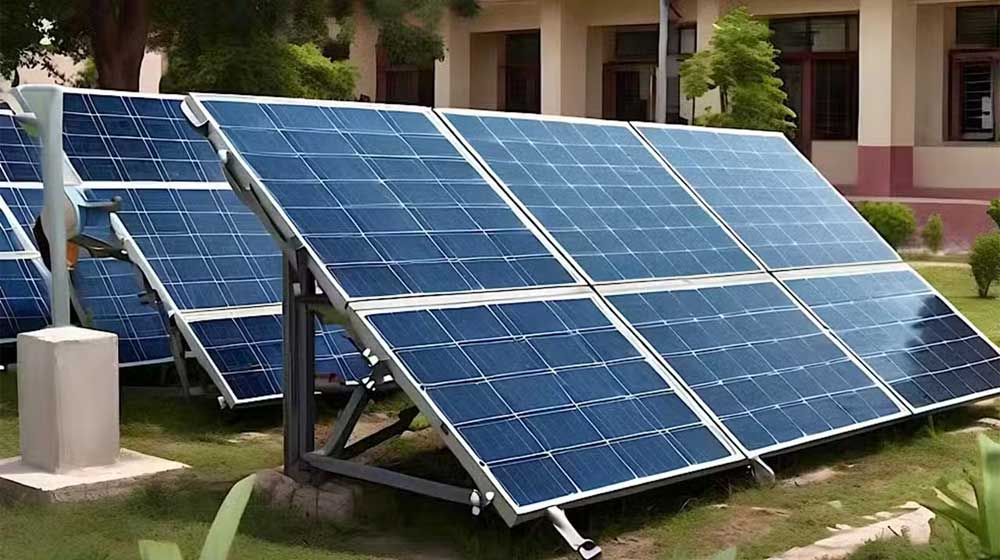
No solar panel tax in budget 2026-27 as FBR shifts focus to enforcement, digital income, and expanding the tax base
Pakistanis worried about new taxes on solar energy can breathe easy. The Federal Board of Revenue confirmed that the federal budget imposes no new taxes on solar panels. FBR Member Inland Revenue Hamid Atiq Sarwar made the clarification during a technical briefing on Budget 2026-27.
Sarwar also argued that growing solar adoption has actively helped prevent electricity prices from rising further. Additionally, the FBR Chairman reinforced the point, stating that solar energy has shielded consumers from even higher power costs amid ongoing tariff pressures.
The clarification matters. Public debate around potential taxation of the renewable energy sector had grown loud in recent weeks. Households and businesses have turned to solar power in large numbers to cope with high electricity tariffs and recurring power shortages. Therefore, any new solar panel tax in the budget would have directly hit millions of consumers.
However, the FBR did announce new measures targeting the digital economy. Individuals earning income through social media platforms will now pay a 5 percent tax. This applies to influencers, content creators, and TikTok users. The government frames this as an effort to document emerging digital income streams and expand the tax base.
Meanwhile, the FBR also announced reductions in taxes on airline tickets and online purchases through credit cards. Officials described these as consumer-friendly measures aimed at facilitating both individuals and businesses.
On the automobile front, new taxation measures apply to vehicles with engine capacities above 2,000cc. Tax rates for vehicles below that threshold remain unchanged.
The FBR has set an ambitious revenue collection target of Rs. 15.264 trillion for the next fiscal year. Sarwar stressed that most new measures focus on enforcement rather than broad-based new taxation. Furthermore, he confirmed that steps worth around Rs. 600 billion in additional revenue target improved compliance rather than fresh levies.
The tax registration gap remains a concern. Only around 600,000 of an estimated four million shopkeepers currently appear on the tax register. Still, Sarwar clarified that the proposed trader scheme in Islamabad would not apply to individuals owning multiple shops. Moreover, tax authorities will not conduct routine inspections of small businesses unless unusual expenditures or discrepancies surface.
The budget also proposes higher duties on e-cigarette liquids to discourage tobacco consumption and generate additional revenue. Separately, doctors, engineers, and other professionals remain subject to a 15 percent tax rate under the existing framework.
Finally, Sarwar noted that the government collected Rs. 322 billion through the super tax and argued that tax rates should eventually return to more sustainable levels. For now, enforcement is the priority — and the solar panel tax in budget discussions has officially been put to rest.