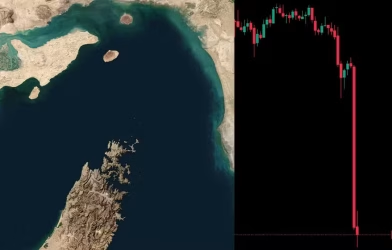
Global oil markets took a dramatic hit on Wednesday. Oil crashes nearly 16 percent to $91.72 per barrel, down from $109.27 the previous close. Meanwhile, West Texas Intermediate (WTI) lost 15 percent, trading at $95 per barrel. The reason was clear — a US-Iran ceasefire brokered by Pakistan had stripped out the biggest risk premium priced into energy markets almost overnight.
For weeks, fears of a prolonged conflict had been pushing crude prices higher. As soon as that threat eased, markets moved fast and sellers took over.
How the Hormuz Reopening and Trump’s Statement Sent Oil Tumbling
Iran’s Foreign Minister Seyed Abbas Araghchi confirmed that Tehran would allow safe maritime passage through the Strait of Hormuz for two weeks. That single statement hit markets hard. After all, the strait carries a major share of the world’s seaborne oil. Any threat to it drives prices up — so naturally, its reopening did the opposite.
Shortly after, US President Donald Trump confirmed the deal via social media. He called it a “double-sided ceasefire” and said most disputes between the two countries were already resolved. Furthermore, Trump indicated both sides were close to a broader long-term peace agreement.
Ultimately, Pakistan’s mediation made all of this possible. Islamabad brought Washington and Tehran to the table — and the result sent shockwaves through global commodity markets. What happens next depends largely on the Islamabad Talks scheduled for April 10.