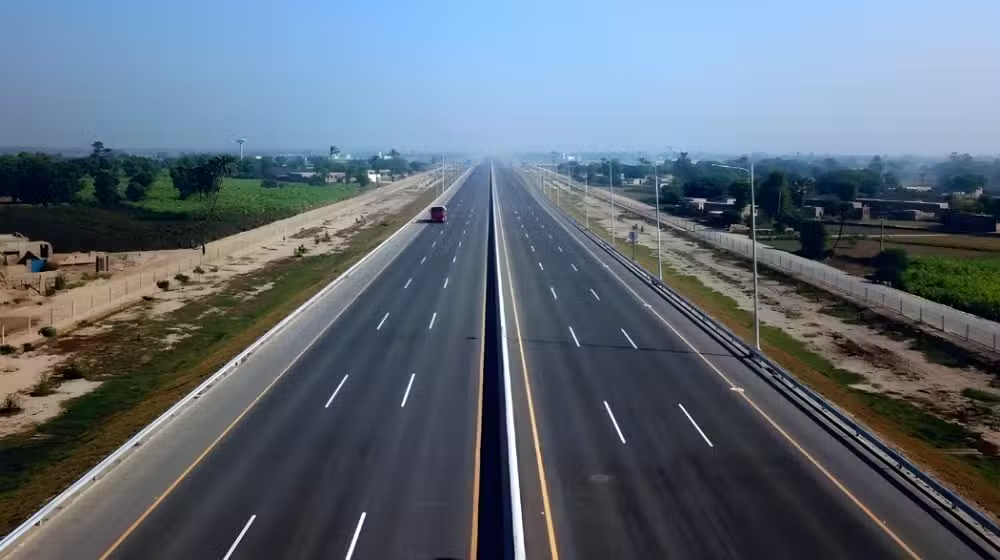
Recent reports have uncovered a staggering infrastructure crime affecting a 200-kilometer stretch of the Sukkur-Multan Motorway (M-5). Thieves have reportedly targeted and removed advanced surveillance equipment between Sukkur and Rahim Yar Khan. This massive infrastructure theft on M-5 includes the disappearance of high-tech speed cameras, solar panels, and essential street lighting. The scale of this operation raises serious concerns regarding the management and security of federal projects within the Sindh province. Many observers now question how such a vast amount of state property could be dismantled and transported without immediate detection by local authorities.
The situation appears most critical near the Jahan Khan forest in the Ghotki district. In this specific area, criminal groups have uprooted entire camera poles and solar structures. Even the protective roofs of police security posts have vanished, leaving several checkpoints completely abandoned. Reflector lights that once guided night-time drivers are now missing or damaged across 90 percent of the affected route. This level of vandalism has effectively blinded the digital monitoring system designed to ensure passenger safety. Without functional lights or cameras, the motorway has become a high-risk zone for commuters traveling through these remote sections at night.
Operational Challenges Following Infrastructure Theft on M-5
The loss of the Intelligent Transport System (ITS) has forced the motorway police to change their daily operations. Because they can no longer rely on fixed digital sensors, officers have returned to traditional manual methods. Personnel now place portable speed cameras along the roadside to identify and fine traffic violators. While these efforts continue, the lack of a centralized monitoring system makes it difficult to track criminal movements or respond to emergencies quickly. This infrastructure theft on M-5 has essentially pushed the law enforcement strategy back by several years, relying on physical presence rather than modern technology.
Beyond traffic enforcement, the missing solar panels and lights have impacted service areas along the route. Most street lights at these rest stops remain switched off, creating an environment that invites further criminal activity. Local business leaders and commuters are calling for an immediate investigation into the performance of the institutions responsible for the motorway’s upkeep. Restoring the damaged infrastructure will require significant public funds and a renewed focus on regional security. For now, travelers are advised to exercise extreme caution and plan their journeys during daylight hours to avoid the unmonitored and unlit stretches of the highway.