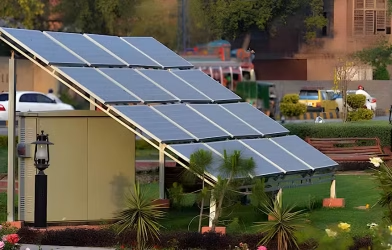

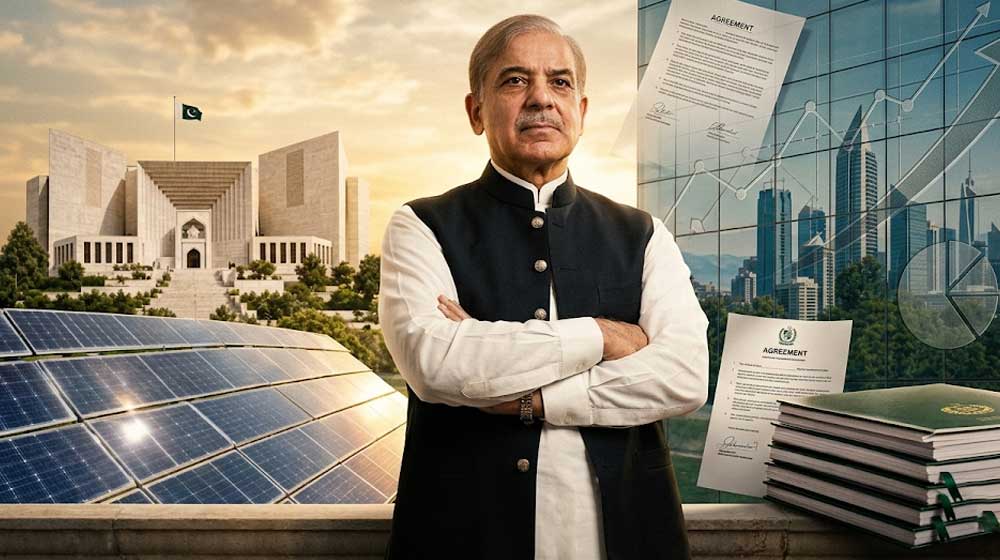
The government is looking at changes to Pakistan’s electricity market because rapid solar adoption, battery storage and shifting consumption have pushed down demand on the national grid. Finance Minister Muhammad Aurangzeb discussed the ideas at a meeting of the Steering Committee on Power Sector Regulatory Regime on Friday, November 20, 2026, according to a statement carried by the Associated Press of Pakistan (APP).
No final decision has been made. The committee agreed that more technical and policy work is needed.
Why the grid is under pressure
The committee discussed excess generation capacity, falling grid demand and rising capacity-payment obligations, which continue to put pressure on tariffs. Capacity payments are fixed charges that must be paid to power plants whether or not electricity is consumed.
The gap is already visible. Analysis by the Pakistan Solar Association, reported by pv magazine, found that demand on the Lahore Electric Supply Company’s network during peak sunlight hours fell from around 2.2 GW in 2024 to just 765 MW in 2026. Meanwhile, Daily Times reported that capacity charges stayed between Rs. 12 and Rs. 15 per unit in the 2024-25 financial year.
The risk for ordinary households is simple. As more consumers leave the grid, fixed costs rise for those who remain connected. That is the problem the committee wants to solve.
An idea to let suppliers compete
One proposal is to adapt the Competitive Trading Bilateral Contract Market, or CTBCM. Dawn has described it as a system in which power producers and buyers deal directly with each other, rather than the government acting as the main middleman. dawn
The ideas include matching existing supply obligations and consumer demand with distribution companies that are being privatised. That could give competitive suppliers more freedom to set tariffs and make better use of existing power plants. app
There is a catch. The effect on existing power purchase agreements, capacity payments and uniform tariff arrangements needs more review, to avoid adding costs for consumers who stay on the grid. A uniform tariff means customers of different distribution companies pay the same national rate.
New rules for power companies
Officials also looked at rules for network operators and competitive suppliers. These cover investment approvals, performance standards, power losses and safeguards against conflicts of interest. Participants said the roles of the power regulator NEPRA and the Competition Commission of Pakistan must be clearly defined so they do not overlap.
The committee reviewed changes to the Multi Year Tariff, the framework that sets what distribution companies can charge over several years. The proposals reward better efficiency, service quality and lower losses, and look at how efficiency gains should be shared so that consumers benefit.
The meeting also covered what happens to the leftover land, unpaid bills, pensions and court cases of distribution companies before privatisation. Aurangzeb asked for a practical, low-cost arrangement that avoids duplication.
Nothing changes on your bill yet
No tariff change was announced. Teams were told to list unresolved issues, including where views differ, and send recommendations for further discussion. Aurangzeb called lower electricity costs, better service and a financially healthy power sector the “overriding objectives of the reform process.”
This was not the first meeting. The committee was set up by the Prime Minister and held its first meeting on September 14, 2026. A second meeting on October 7 also looked at growing solar use and changing demand patterns.