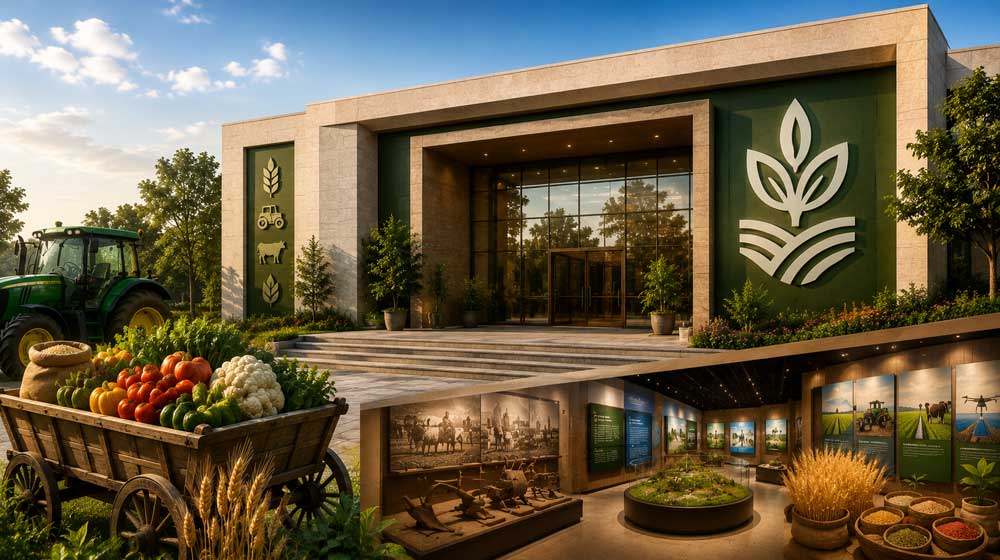
Pakistan is creating something unprecedented. The nation’s first Food Agriculture Museum will be established at the University of Agriculture Faisalabad. Therefore, the Food Agriculture Museum project represents a landmark cultural and educational initiative. Moreover, Rs. 300 million in phased funding will support the museum’s development through the Punjab Higher Education Commission.
The museum addresses a critical gap in Pakistan’s institutional landscape. Rapid modernization threatens historical memory and cultural continuity dangerously. Museums function as centers of learning and public awareness simultaneously. Additionally, they preserve artifacts while documenting scientific and social development. Furthermore, this museum will reconnect people with their agricultural heritage meaningfully.
The initiative traces back to historical institutional precedent. Punjab Agricultural College and Research Institute established in Lyallpur emerged from colonial Famine Commission recommendations. That institution, now called UAF, exists to modernize agricultural practices fundamentally. Therefore, creating a museum honoring this legacy completes a meaningful historical circle appropriately.
PHEC Chairperson Prof. Dr. Iqrar Ahmad Khan emphasized heritage preservation importance. Reconnecting communities with cultural roots matters increasingly. Additionally, museums serve as innovation hubs and awareness centers. Furthermore, they document community development across generations thoroughly. The museum will occupy 55,000 square feet of indoor display space. This substantial area allows comprehensive exhibition of agricultural evolution.
The galleries will showcase remarkable transitions comprehensively. Indigenous seed varieties demonstrate pre-modern agricultural practices. Traditional wooden plows illustrate manual farming techniques historically. Greenhouse models display early modernization efforts. Meanwhile, genomic breeding represents contemporary scientific advancement. Finally, digital precision farming showcases cutting-edge technological integration completely.
UAF Vice Chancellor Prof. Dr. Zulfiqar Ali stressed knowledge transmission importance. Preserving agricultural heritage ensures farming knowledge passes to future generations. This intergenerational knowledge transfer remains essential for national food security. Additionally, understanding historical practices informs modern innovation strategies. Furthermore, recognizing indigenous knowledge enriches contemporary agricultural approaches substantially.
The museum will trace agricultural evolution across multiple dimensions systematically. Plant breeding advancement receives thorough documentation. Irrigation technology development gets showcased progressively. Crop production methods demonstrate modernization trajectories. Machinery innovation displays mechanical evolution. Finally, sustainable farming practices highlight environmental consciousness development.
The project reflects growing recognition of heritage value. Museums preserve more than objects—they document entire civilizations’ development. Agricultural museums specifically celebrate farming communities’ contributions fundamentally. Therefore, this Food Agriculture Museum celebrates Pakistan’s farming heritage authentically. Finally, the institution will serve educational and inspirational purposes throughout coming generations.